Polymer Optical Fiber: The "Plastic Nerve" That Carries Visible Light
Imagine a transparent strand as flexible and tough as a nylon rope, yet capable of transmitting data at the speed of light. This is Polymer Optical Fiber (POF), a remarkable medium that uses plastic, not glass, to guide light signals. Like a visible laser beam trapped inside a duct, it serves as a highly reliable neural network for industrial and automotive applications.
Core Anatomy: The Light Path in Plastic
The design of POF is both clever and straightforward:
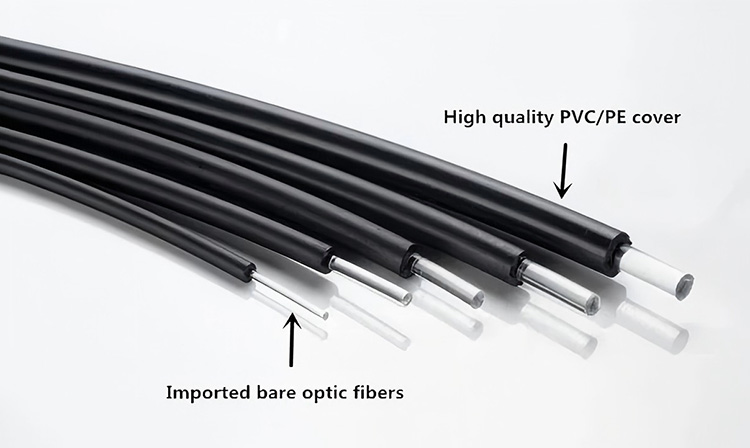
Core: Typically made of Polymethyl Methacrylate (PMMA), a high-clarity plastic that acts as the pathway for light signals.
Cladding: The core is surrounded by a fluorinated polymer. With a lower refractive index, this layer acts like an invisible mirror, using total internal reflection to confine light within the core and guide it along the fiber's length.
This use of visible light (e.g., 650nm red light) is its most intuitive magic—you can literally see with your own eyes if the signal is active.
Why Choose POF? Five Unmatched Advantages
In the arena of short-range data transmission, POF stands out with its unique blend of ruggedness and user-friendliness:
Extreme Durability & Resilience
Bend-Insensitive: It can withstand tight bend radii of less than 20mm without breaking or significant signal loss.
Environmental Toughness: It operates reliably from -40°C to +85°C, resisting humidity, salt spray, and oxidation, with a typical service life exceeding 20 years.
Easy Installation, Lower Cost
"Forgiving" Connections: Its large core diameter (~1mm) allows for relaxed alignment tolerances in connectors, eliminating the need for precision polishing.
Simple Termination: Ends can be prepared quickly with a basic cleaving tool, drastically reducing installation cost and skill requirements.
Visual Fault Diagnosis
Because it carries visible light, troubleshooting is remarkably simple. A quick visual check for light at the fiber end provides instant confirmation of connectivity, no complex test equipment needed.
Excellent Cost-Effectiveness
POF systems offer a lower total cost of ownership compared to glass fiber for short links, thanks to cheaper components, connectors, and installation.
Inherently Safe & Robust
Being plastic, it is electrically insulating and immune to electromagnetic interference (EMI), making it ideal for noisy industrial environments.
Field of Action: Where Reliability is Paramount
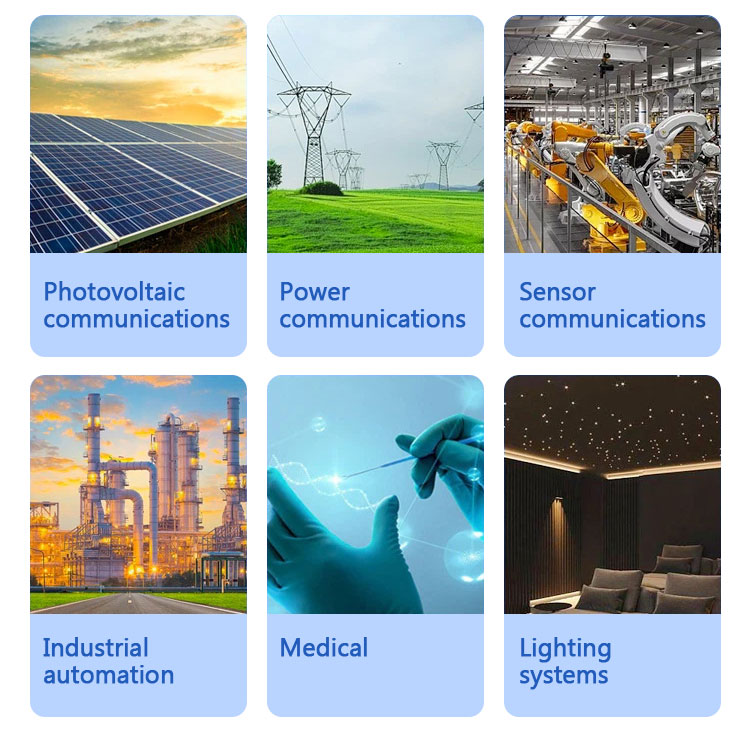
POF is not designed for ultra-long-haul or extreme bandwidth; it excels as a specialist in scenarios demanding ruggedness:
Automotive Networks: Used in infotainment systems (e.g., MOST) and advanced driver-assistance system (ADAS) data links.
Industrial Automation: Connects machine tools, robots, and sensors in environments with vibration, dust, and oils.
Home & Professional A/V: Transports high-fidelity audio and video signals.
Harsh Environments: Medical devices, marine applications, and decorative lighting where corrosion resistance and flexibility are key.
Conclusion
If glass optical fiber is the "information superhighway" of the global backbone, then Polymer Optical Fiber is the reliable "city road" and "durable footpath" inside and between devices. By combining the toughness of plastic, the intuitiveness of visible light, and unparalleled ease of installation, POF has established itself as an indispensable standard in applications where durability, stability, and maintainability are critical.